Polish Opposition Leader Urges Blocking Ukraine’s EU Accession Amid Rising Bilateral Tensions
Jarosław Kaczyński calls on Warsaw to halt EU negotiations with Kyiv, reflecting growing strain that could affect US business interests in the region.
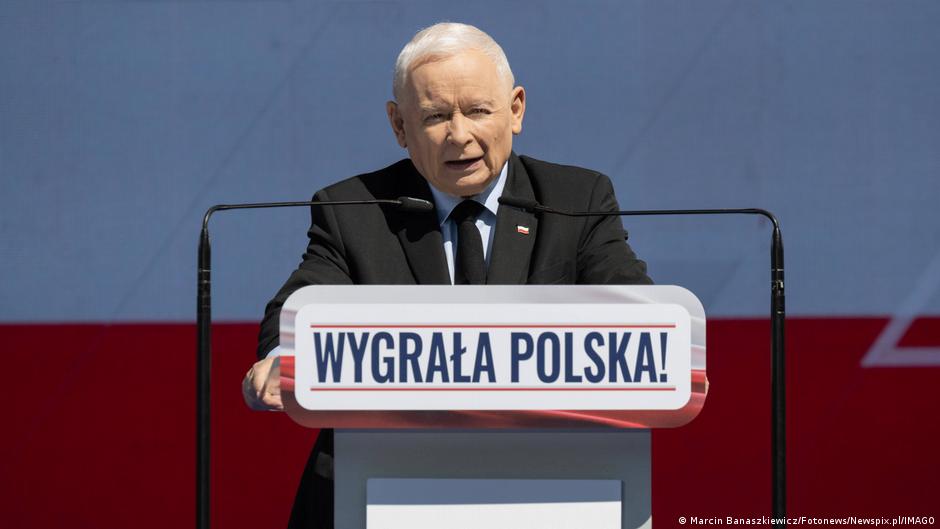
Jarosław Kaczyński, leader of Poland’s opposition party Law and Justice (PiS), has called for the Polish government to block negotiations on Ukraine’s accession to the European Union. He accused Kyiv of exacerbating tensions with Warsaw, signaling a sharp escalation in Polish-Ukrainian relations that may impact broader geopolitical and economic dynamics relevant to US businesses and investors in Eastern Europe.
Political and Economic Implications for the West
Kaczyński’s comments come amid a complex backdrop of diplomatic friction between Poland and Ukraine. Just days before, the Polish opposition leader announced his intention to return a medal awarded to him by Ukraine, emphasizing his disapproval of the Ukrainian political elite rather than the Ukrainian people. His rhetoric sharply contrasts with the stance of Poland’s current Prime Minister Donald Tusk, who recently hosted the Ukraine Recovery Conference 2026 in Gdańsk. The conference concluded with the signing of 160 agreements totaling over €10 billion in support and reconstruction aid for Ukraine.
This divergence within Poland’s political landscape highlights growing domestic pressures ahead of the 2027 parliamentary elections. Kaczyński appears to be appealing to Polish farmers concerned about Ukrainian agricultural imports, and to citizens wary of the economic burden posed by hosting Ukrainian refugees. For American companies engaged in Eastern European markets, these developments could introduce uncertainty in supply chains, cross-border investments, and regional stability.
"Kaczyński seeks to harness nationalist sentiment by targeting economic grievances related to Ukrainian imports and refugee support," analysts note.
The immediate trigger for the diplomatic crisis was Ukrainian President Volodymyr Zelensky’s decision to name a Ukrainian Armed Forces unit after the “heroes of the Ukrainian Insurgent Army” (UPA). The UPA is revered in Ukraine as a symbol of the struggle for independence, but in Poland it is closely linked to the traumatic history of the 1943-44 Volhynia massacres. In response, Polish President Karol Nawrocki revoked Ukraine’s highest Polish honor, the Order of the White Eagle, from Zelensky.
The fallout extended further as several high-ranking Ukrainian officials, including Kirill Budanov, head of the Ukrainian President's Office, and Ukrainian Foreign Minister Andriy Sybiha, returned their Polish honors in protest. Zelensky himself withdrew from attending the Gdańsk conference, where he was initially scheduled to lead Ukraine’s delegation.
Washington’s Strategic Calculus and US Business Interests
From a US perspective, these tensions pose significant policy and economic considerations. Poland has been a key NATO ally and frontline state supporting Ukraine amid Russia’s invasion. The US has invested considerable diplomatic and financial capital in keeping the transatlantic coalition united. Any rupture between Poland and Ukraine could complicate Western coordination on security and reconstruction efforts.
For American companies, the discord introduces risks to supply chains involving Ukrainian agriculture and raw materials transiting through Poland. Rising nationalist rhetoric may lead to protectionist trade measures or border disruptions, potentially increasing costs and delays. Additionally, investor confidence in Eastern European markets might waver amid political instability, affecting sectors ranging from energy to manufacturing.
US policymakers and businesses will be closely monitoring how Poland’s internal politics shape its foreign policy toward Ukraine, especially with parliamentary elections approaching. The outcome will influence the broader EU enlargement agenda and the stability of a region critical to American strategic interests.