Iran Imposes New Vessel Information Declaration for Passage Through Strait of Hormuz
Iran requires detailed vessel data from tanker operators, raising concerns for US businesses navigating the Strait of Hormuz amid heightened tensions.
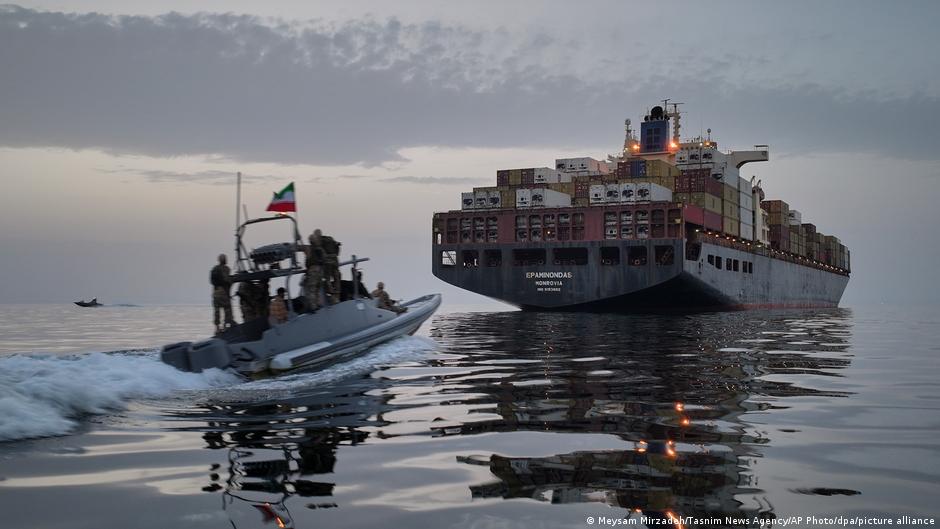
Iran has introduced a new "Vessel Information Declaration" that shipping companies must complete for their tankers to pass through the strategically vital Strait of Hormuz. The declaration, which contains over 40 questions, was drafted by the Iranian Persian Gulf Strait Administration (PGSA) and aims to gather extensive information about vessels, cargo, and crew before passage.
Implications for US Shipping and Business
The declaration requests details such as the vessel's name, identification number, previous names, country of origin, destination, and comprehensive information on the nationality of owners, operators, and crew members. It also demands an exhaustive description of the cargo aboard. This information must be submitted electronically to the PGSA prior to transit.
"The applicant bears sole responsibility for providing accurate and complete information, and will be held accountable for any consequences arising from false or incomplete data," the PGSA states.
While the document does not explicitly state that Iran will impose transit fees, previous statements from Tehran have indicated potential charges of up to $2 million per vessel passing through the Strait. These fees are viewed as a possible revenue source to aid in reconstruction efforts following damage from US and Israeli airstrikes.
However, US individuals and companies are explicitly prohibited from making any payments to the Iranian government or the Islamic Revolutionary Guard Corps (IRGC) for safe passage. The US Treasury Department clarified that such payments, direct or indirect, are forbidden for US persons, including American financial institutions and foreign entities controlled by US interests.
This prohibition means that American shipping companies face a legal and operational dilemma: comply with Iran's new demands or risk violating US sanctions and potentially incurring severe penalties. The administration’s stance complicates navigation through this critical maritime chokepoint, through which approximately 20% of the world’s petroleum passes.
US Military and Diplomatic Response
On May 4, the United States launched "Operation Sentinel," under which US military forces escort commercial vessels through the Strait to deter Iranian interference. President Donald Trump warned of retaliatory measures against Iran should any US ships be attacked. State Department officials have emphasized the defensive nature of this operation, with Secretary of State Marco Rubio stating that no shots will be fired unless provoked.
On May 6, President Trump announced a temporary pause in "Operation Sentinel" to explore diplomatic avenues and finalize a potential agreement with Iran, a move reportedly encouraged by Pakistan and other nations.
For US businesses, these developments underscore escalating geopolitical risks in the Strait of Hormuz, a critical artery for global energy supplies. Shipping companies must navigate complex regulatory demands from Iran while adhering to US sanctions policies, potentially increasing transit costs and operational uncertainties.
Given the strategic importance of the Strait and ongoing tensions, American companies—particularly in the oil and shipping sectors—need to closely monitor the evolving regulatory landscape and US government guidance to mitigate risks and maintain compliance.



