Russian Strikes Hit Ukrainian Logistics, Warehouses and Power Infrastructure
Attacks on Odesa, Kyiv region and Mykolaiv damaged delivery, storage and energy assets as Washington weighs the business costs of the war.
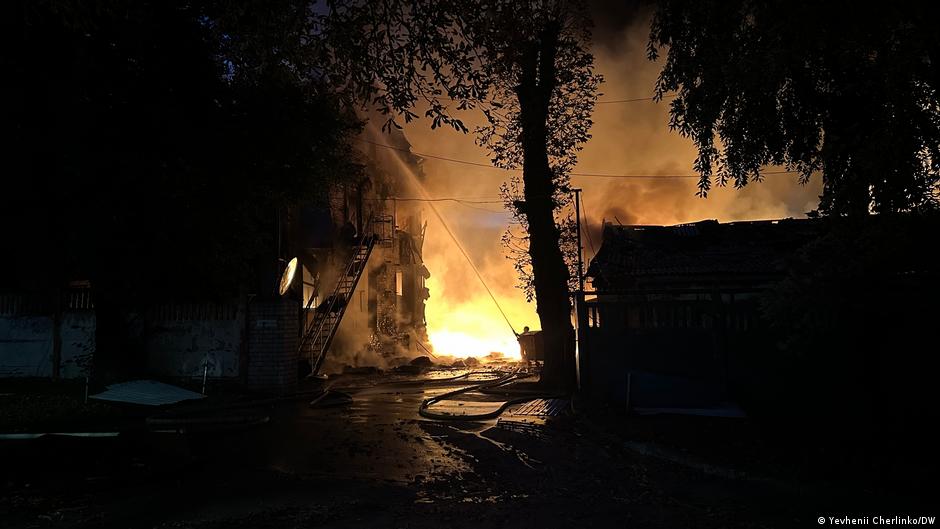
Russian forces attacked Kyiv and Odesa regions, as well as the city of Mykolaiv, on the evening of September 12 and during the night of September 13, according to local Ukrainian authorities. The reported damage underscored how the war continues to strike not only military targets but also the logistics, warehousing and energy systems that keep Ukraine’s economy functioning and shape the wider cost calculations watched in Washington and by American companies exposed to the region.
In Odesa region, two people were injured in an evening drone attack on a branch of Nova Poshta, the major Ukrainian delivery company, regional military administration head Oleh Kiper and representatives of the State Emergency Service said. Kiper said the strike damaged the building facade, glazing and a cargo truck.
“The facade of the building, glazing and a cargo truck were damaged,” Kiper said, according to the regional account.
The attack on Nova Poshta is significant beyond the immediate local damage. The company is a central private-sector logistics operator in Ukraine, moving parcels and commercial goods through a wartime economy that depends heavily on resilient distribution networks. For U.S. policymakers and businesses, each strike on such infrastructure is a reminder that Ukraine’s ability to sustain trade, humanitarian deliveries and domestic commerce remains tied to air defense, energy reliability and insurance risk.
Authorities also reported damage in Odesa itself. Serhiy Lysak, head of the city military administration, said a high-rise residential building was damaged in an attack on the city. It was the second hit on an apartment building in Odesa within a day, according to the source report. No additional casualty figures were provided for that incident.
Warehouses and Power Supply Under Pressure
In Kyiv region, the regional military administration said warehouse premises were damaged in Boryspil district after strikes on the evening of September 12, and a fire broke out. In Brovary district, a warehouse and a private home were damaged. The report did not identify the companies or goods connected to the warehouse sites, and no deaths or injuries were reported.
For American firms, the pattern matters. Warehouses, cargo vehicles and delivery hubs are the connective tissue of commercial activity. Even when individual facilities are not tied to U.S. companies, repeated attacks can raise costs across supply chains by delaying shipments, increasing security requirements and making inventory planning more difficult. U.S. businesses selling into Ukraine, sourcing services from Ukrainian partners, or supporting reconstruction and aid operations all depend on predictable movement of goods and power.
Kyiv Mayor Vitali Klitschko reported that air defense systems were operating and urged residents to remain in shelters. Air raid alerts across different parts of Kyiv region were also announced overnight on the Telegram channel of the Kyiv regional military administration. Authorities said no information about deaths or injuries had been received.
In Mykolaiv, an evening attack on energy infrastructure left several districts of the regional center partially without electricity, regional military administration head Heorhiy Reshetylov wrote on Telegram. He said power engineers would begin restoring electricity as soon as the security situation allowed work to start. Reshetylov later reported the all-clear, then wrote that an air alert had resumed.
“As soon as the security situation allows work to begin, power engineers will start restoring electricity supply,” the regional post said.
The partial blackout in Mykolaiv illustrates the dual strain on Ukraine’s public services and private sector. Power interruptions can disrupt manufacturing, retail, telecommunications, transportation and refrigerated supply chains. For Washington, energy infrastructure attacks have been a recurring argument in debates over aid, air defense systems and sanctions enforcement. They also influence the assumptions of U.S. investors and contractors assessing Ukraine-related risk.
Washington’s Bottom-Line View
The latest reported strikes came as Ukraine continues to rely on outside support to defend civilian and commercial infrastructure. The source account did not include a Russian statement on the attacks, nor did it provide estimates of the total number of drones or missiles involved. It also did not identify the specific air defense systems used around Kyiv or any damage assessment beyond the local reports.
Still, the business implications are clear from the sites named by Ukrainian officials. A delivery branch, warehouses, a cargo truck, residential buildings and energy infrastructure are all assets that shape the functioning of a modern economy. Their disruption can increase the cost of doing business, slow recovery planning and complicate the operating environment for foreign partners.
For U.S. companies, the immediate exposure may vary. Some have direct operations, vendors or customers in Ukraine; others are affected through insurance markets, compliance obligations, humanitarian logistics or reconstruction planning. The more strikes target civilian-adjacent economic infrastructure, the more businesses must account for security, redundancy and downtime as part of any Ukraine strategy.
Politically, the attacks add to the pressure on U.S. officials weighing the scale and purpose of further assistance. Air defense, energy repair capacity and logistics resilience are not abstract categories for Ukraine’s economy. They are the conditions that determine whether private firms can move goods, whether households can receive services and whether local authorities can keep essential systems running after overnight attacks.
The reported absence of fatalities in Kyiv region does not reduce the broader commercial signal. Damage to warehouses and power infrastructure can compound over time, particularly when repair crews must wait for air alerts to end before beginning restoration work. In Mykolaiv, officials explicitly tied repair timing to the security situation, showing how military risk directly governs civilian economic recovery.
As of the reports cited by local authorities, two people were injured in the Odesa region strike on Nova Poshta, warehouse and residential property were damaged in Kyiv region, a high-rise was damaged in Odesa, and several districts of Mykolaiv were partially without power after an attack on energy infrastructure. For Washington and U.S. business leaders, the episode is another example of how battlefield developments translate quickly into economic risk, public spending debates and private-sector contingency planning.