Trump Proposes Hosting Next FIFA World Cup in US Without Canada and Mexico, Eyes China Partnership
Former President Donald Trump suggests the US should host another World Cup solo or with China, signaling shifts with North American partners and potential business impacts for US stakeholders.
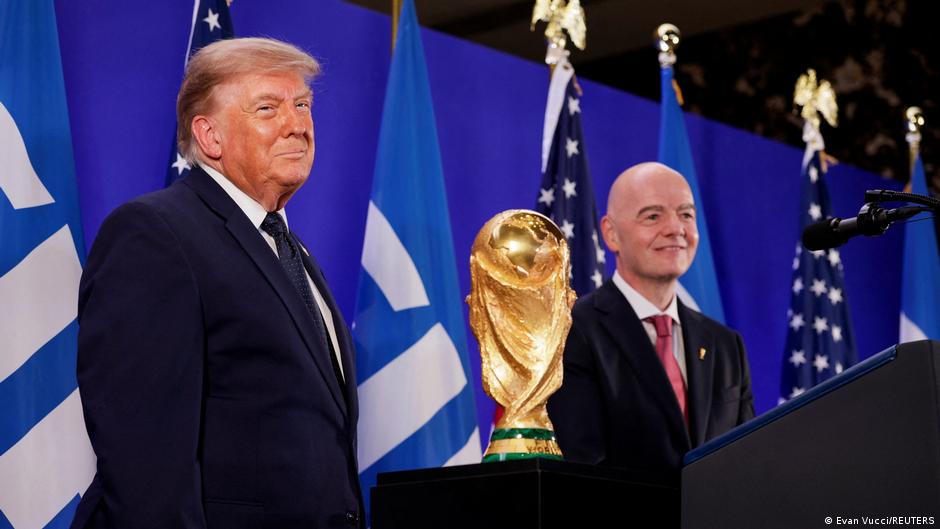
Former US President Donald Trump has publicly advocated for the United States to host another FIFA World Cup, this time without the co-hosting involvement of Canada and Mexico. Speaking at a press conference in New York on July 18, Trump emphasized a more unilateral US role for an upcoming tournament and hinted at a new partnership with China as a co-host.
Implications for North American and Global Sports Hosting
Trump stated, "Next time you should pick the United States again. This time we are ready to hold the World Cup without Canada and Mexico. Back then I was very generous and allowed them to join. Now let’s do it without them, pick us, and next time invite someone else." This marks a notable departure from the 2026 FIFA World Cup, which is being hosted jointly by the US, Canada, and Mexico—an event widely promoted as a symbol of North American cooperation.
During the same briefing, FIFA President Gianni Infantino expressed support for the idea, suggesting that the next World Cup could be hosted by the US alongside China. "Players will have short flights between games, I think they will like that," Trump commented, highlighting the logistical advantages of such a partnership.
"I thought we were not a soccer country. It turned out that we are, and I think it will continue that way," Trump declared.
Infantino praised the 2026 tournament as "the greatest World Cup of all time," acknowledging Trump's role in its success. Trump reciprocated by calling the event "possibly the most successful sporting event in human history." He also thanked FIFA for overturning the suspension of US player Folarin Balogun, a decision that drew international attention and commendation.
Trump is expected to attend the final of the 2026 World Cup at MetLife Stadium in East Rutherford, New Jersey, where Argentina and Spain will compete on July 19. Following the match, he is slated to present the winner with the championship trophy.
Broader Business and Political Context
Trump's proposal to exclude Canada and Mexico from hosting duties could have significant implications for US trade and diplomatic relations, especially as the three countries operate under the United States-Mexico-Canada Agreement (USMCA). The move might signal a push for the US to leverage major international events for increased domestic economic benefits, potentially sidelining its North American neighbors.
Additionally, suggesting China as a co-host introduces a new dimension to the geopolitics of global sports events. Chinese involvement could open vast commercial opportunities for American companies engaged in sports infrastructure, broadcasting, and sponsorships, yet it also raises concerns about the political and economic ramifications amid US-China tensions.
The upcoming 2030 FIFA World Cup is scheduled to be hosted by Morocco, Portugal, Spain, and three South American countries—Uruguay, Paraguay, and Argentina—while the 2034 event will take place in Saudi Arabia. The next open bidding cycle for hosting rights is for the 2038 tournament, which the US may pursue, potentially reshaping the nation's role in international sports diplomacy and commerce.
As the US continues to assert itself as a premier venue for global sporting events, Trump's proposals and FIFA's evolving hosting landscape underscore the intersection of sports, politics, and business on the world stage.