Uzbek Banks Report Strong Q1 Earnings, Signaling Growth Amid Rising Market Competition
Leading Uzbek banks posted notable profit increases and asset growth in Q1 2026, reflecting expanding financial activity with implications for US investors.
Uzbekistan’s banking sector has demonstrated robust financial performance in the first quarter of 2026, with leading institutions reporting increased profitability, asset expansion, and intensified market competition. This trend could present emerging opportunities and risks for US businesses and investors engaged with Central Asian financial markets.
Sector Overview and Financial Highlights
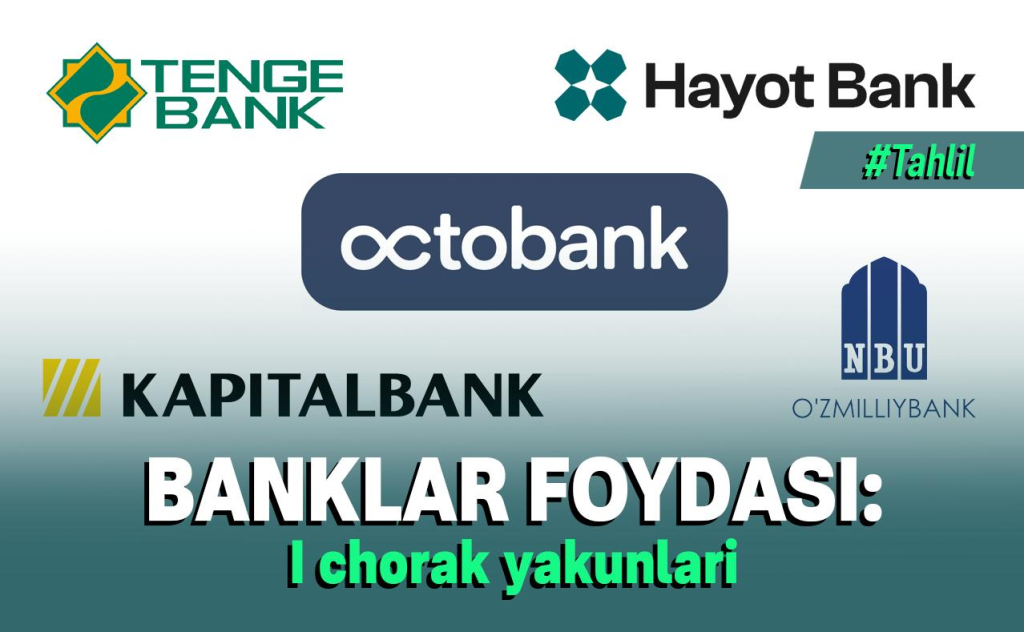
Major players such as Octobank, Tengebank, Kapitalbank, Milliybank, and Hayotbank disclosed their Q1 financial statements, revealing a significant rise in total banking assets to 15.52 trillion Uzbek soms. Investment portfolios formed the largest component of these assets, totaling 6.71 trillion soms, highlighting a diversified asset base.
The banks’ income streams showed strong diversification. Interest income reached 238.3 billion soms, while non-interest income surged to 1.2 trillion soms, underscoring the growing importance of fees, commissions, and other non-lending revenue sources in sustaining profitability.
On the expense side, interest expenses stood at 176.9 billion soms, with non-interest costs totaling 1.04 trillion soms. Operational costs amounted to 111.6 billion soms, of which 73.8 billion related to employee compensation. The banking sector also contributed 110 million soms in income tax to the government budget during the period.
“A notable diversification in revenue sources and significant growth in non-interest income enabled banks to post strong quarterly profits despite challenges in credit risk provisioning.”
Bank-Specific Performance and Trends
Tengebank experienced a remarkable surge in net profit to nearly 34 billion soms, a leap from just 920.9 million soms in the same quarter last year. Despite stable interest income, increased reserves for potential credit and leasing losses pushed net interest income into negative territory (-5.3 billion soms). However, commission income grew sharply from 12.8 billion to 57 billion soms, driving overall profitability.
The bank’s loan portfolio expanded by 8.4% year-on-year to 4.5 trillion soms, although the share of non-performing loans rose from 2.3% to 3.4%, indicating elevated credit risk.
Milliybank reported net profits of 603.2 billion soms, a 28.9% increase over the previous year’s Q1 figure of 467.9 billion soms. Interest income grew by 15% to 4.7 trillion soms, with interest expenses at 2.5 trillion soms. Operational costs rose 26%, reaching 673.1 billion soms, including 372.2 billion spent on employee salaries and related expenses. The bank paid 22.5 billion soms in income taxes during the quarter.
Kapitalbank posted a net profit of 324.8 billion soms and expanded its assets to 58.23 trillion soms. Credit and leasing operations dominated its asset structure at 36.6 trillion soms. Interest income stood at 1.85 trillion soms, with non-interest income close behind at 1.64 trillion soms. Interest expenses totaled 1.07 trillion soms, while operational expenses amounted to 715.7 billion soms, including 269.8 billion for employee-related costs.
Hayotbank earned a net profit of 14.6 billion soms, with assets growing to 7.43 trillion soms. Credit and leasing assets comprised 5.63 trillion soms of this total. Interest income was 332.5 billion soms, complemented by 87.2 billion soms in non-interest income. Expenses included 253.5 billion soms in interest costs and 22.2 billion soms in non-interest expenses. Operational costs reached 66.8 billion soms, with 41.6 billion spent on personnel.
Implications for US Businesses and Washington
The upward trajectory of Uzbekistan’s banking sector signals a maturing financial market in a strategically important region, which could attract increased participation from US investors and financial institutions. Robust diversification of bank revenue models and growing asset bases indicate potential for increased cross-border deals and investment flows.
However, the rise in non-performing loans, particularly at Tengebank, suggests heightened credit risk that US companies and policymakers should monitor closely. Furthermore, operational cost increases may reflect inflationary pressures or efforts to improve service quality, both relevant for assessing the long-term profitability and stability of Uzbek banks.
For Washington, supporting transparent and stable financial environments in Central Asia aligns with broader strategic interests, including promoting economic development and countering influence from other global powers in the region. Continued reforms and growth in Uzbekistan’s banking sector could provide avenues for US financial firms aiming to deepen presence in emerging markets.
Based on reporting by Deutsche Welle.