Zaporizhstal Damage Deemed Critical After Third Russian Strike in a Month
The shutdown of one of Ukraine’s largest steel plants adds new pressure on Kyiv’s economy and on Western supply-chain planning.
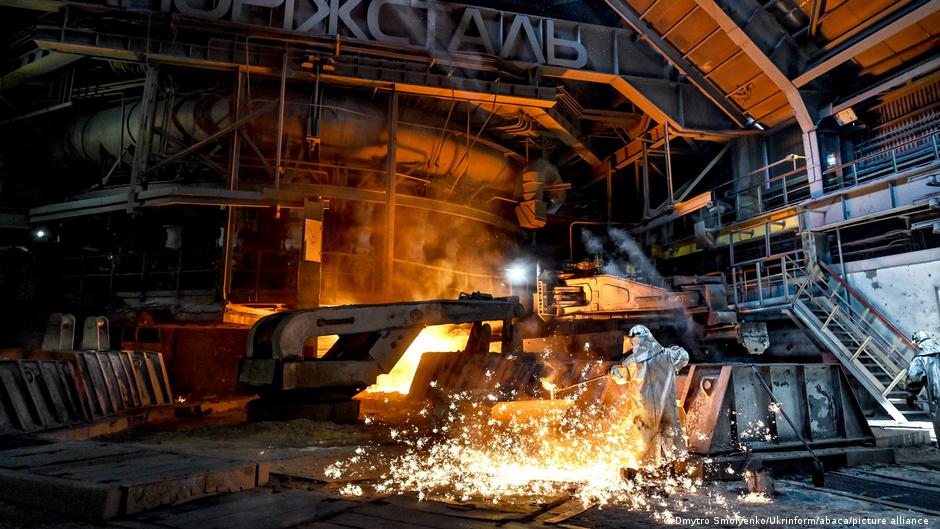
Zaporizhstal, one of Ukraine’s largest industrial plants, has sustained what company officials preliminarily described as “critical” damage after a third Russian missile strike in a month, deepening the economic consequences of the war for Kyiv and sharpening questions for Washington about Ukraine’s industrial resilience.
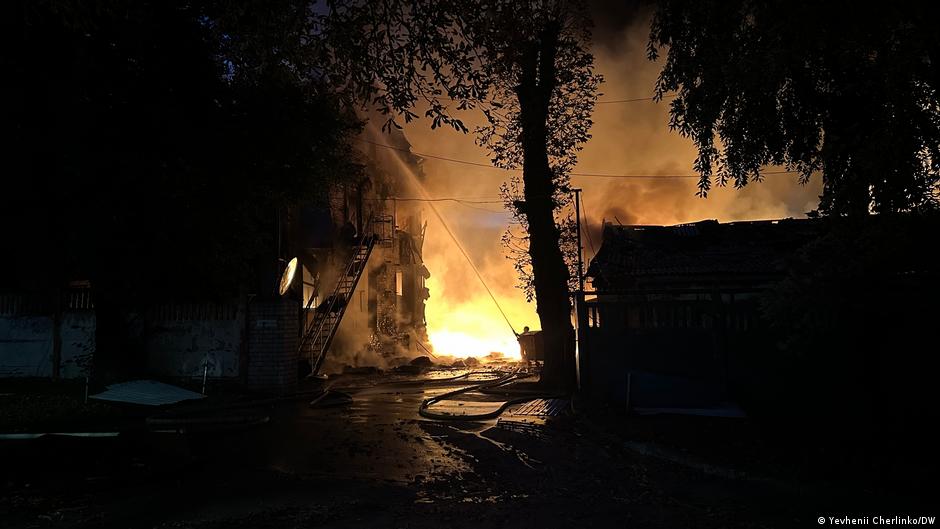
The steelworks, located in the city of Zaporizhzhia, was hit by ballistic missiles overnight into Saturday, September 12. According to a company press release published the same day, four missiles struck the production site in the latest attack. The plant had already fully halted operations after earlier strikes on August 11 and August 27, but at least four workers were still present during the September attack. All four were injured, and three required hospitalization.
The company said the latest strike damaged equipment in the blast-furnace and open-hearth shops, as well as the plant’s energy system and logistics infrastructure. Emergency response and damage assessment work is continuing at the site, with officials still trying to determine the full scope of destruction.
“The scale of destruction grows with each strike. It is still impossible to assess it finally, but preliminarily we classify the damage as critical,” said Oleksandr Myronenko, chief operating officer of Metinvest Group, which includes Zaporizhstal.
A Steel Shock With Wider Economic Reach
For U.S. policymakers and companies tracking Ukraine’s war economy, the repeated attacks on Zaporizhstal are not simply another episode of battlefield destruction. The plant has been a major pillar of Ukrainian steel production, employment and tax revenue. Its shutdown removes a large share of capacity from a sector that matters to construction, transport, defense-related supply chains and export earnings.
Zaporizhstal said the first major missile attack took place overnight on August 11. Eight employees were killed and 26 others were wounded. The damage to equipment was severe enough to force the steelworks to stop operating entirely, while other production sites began operating at reduced capacity.
A second major attack followed on August 27. According to Zaporizhstal, five missiles hit the plant during that strike. No one was killed or injured, but the blast-furnace shop, energy and transport infrastructure, and open areas of the plant were damaged. At the time, Myronenko said production restart timelines existed “only in theory,” because crews had just cleared rubble from the previous strike when another one occurred.
The third attack in less than five weeks now puts the plant’s recovery even further out of reach, at least pending a more complete technical assessment. For Ukraine, the bottom-line effect is potentially substantial: less output from a leading steel producer, more pressure on industrial employers, and another strain on government revenue at a time when public finances remain heavily dependent on wartime spending and Western support.
Why Washington and U.S. Business Will Be Watching
The destruction also has implications beyond Ukraine. The United States has treated Ukraine’s economic endurance as a strategic issue, linking financial aid, energy support, infrastructure repair and defense assistance to Kyiv’s ability to keep functioning under Russian attack. Damage to a plant of this size underscores how Moscow’s missile campaign can target not only military infrastructure but also the industrial base that supports Ukraine’s broader economy.
For American businesses, the immediate exposure varies by sector. Companies involved in metals trading, reconstruction planning, logistics, energy equipment, insurance, industrial machinery and infrastructure finance are likely to pay particular attention to the condition of Ukrainian steelmaking capacity. Any prolonged disruption at a major producer can affect expectations for future Ukrainian supply, domestic reconstruction inputs and the timing of private-sector investment once security conditions permit.
The numbers show why the plant matters. According to Zaporizhstal, in 2025 the steelworks produced almost 3.568 million tons of pig iron and 3,212 tons of steel. Across Ukraine, industry association Ukrmetallurgprom calculated that plants produced 7.884 million tons of pig iron and 7.409 million tons of steel that year. On that basis, the Zaporizhzhia plant accounted for more than 45% of all pig iron produced in the country and more than 42% of Ukrainian steel.
The plant is also a major regional employer. In May 2026, Zaporizhstal topped the list of the largest employers in Zaporizhzhia region, according to the company’s press service, which cited an annual ranking by Opendatabot, a service that provides access to Ukrainian state data on individuals and legal entities. At that point, more than 8,000 people worked at the enterprise.
Its fiscal role is also significant. In 2025, the steelworks paid nearly 2.7 billion hryvnias, equivalent to 52.34 million euros, in taxes to budgets at all levels. A prolonged stoppage therefore affects not only shareholders and workers but also public revenue streams that help sustain local and national government functions during the war.
For Washington, the latest strike reinforces a recurring policy dilemma: Ukraine’s military defense and economic survival are increasingly intertwined. Air defense, energy-grid repair, industrial resilience and private-sector confidence all feed into the same calculation. If major employers and exporters remain vulnerable to repeated missile attacks, the cost of keeping Ukraine’s economy viable rises for Kyiv and its Western partners.
Zaporizhstal has not yet provided a final estimate of the damage or a firm timetable for restoring production. Given the sequence of attacks in August and September, company officials have suggested that any restart planning remains provisional. The immediate priority, according to the company, is clearing the aftermath of the strike and studying damaged facilities to clarify the nature and extent of the destruction.