AfD Win in Eastern Germany Draws Polish Alarm and US Business Questions
Donald Tusk’s sharp warning after the Saxony-Anhalt vote highlights political risk in Europe’s largest economy and a key US trade partner.
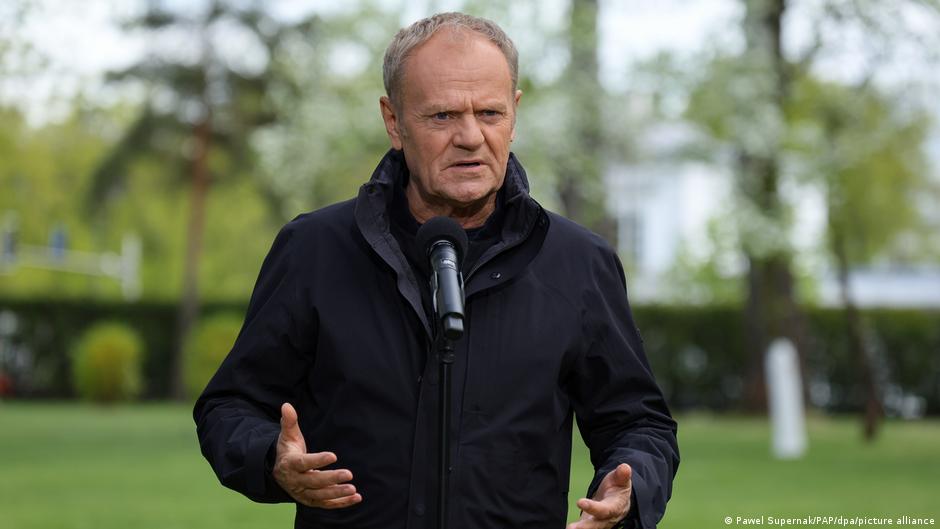
Polish Prime Minister Donald Tusk reacted with alarm after the far-right Alternative for Germany, or AfD, posted a commanding result in elections for the state parliament of Saxony-Anhalt, a development that could sharpen concerns in Washington and among American companies about the direction of politics in Europe’s largest economy.
In neighboring countries, senior politicians moved quickly to respond to the AfD’s success in the eastern German state. Tusk, whose country borders Germany and is deeply exposed to German political and economic decisions, was blunt in his assessment.
“In Poland, only idiots or traitors can rejoice at the triumph of the AfD party in Germany,” Tusk wrote on X on Sunday evening, September 6.
According to Tusk, a number of such people had “accumulated” in Poland’s opposition parties Confederation and Law and Justice, known as PiS. His language underscored how strongly the result is being read beyond Germany’s borders, particularly in countries that see German stability as central to European security, investment, and policy coordination.
For the United States, the Saxony-Anhalt vote is not merely a local German political story. Germany remains a cornerstone of Washington’s European strategy, from NATO coordination and Ukraine policy to industrial supply chains, energy transition projects, and transatlantic trade. A major advance by a far-right party in a German state parliament can add uncertainty for US policymakers and businesses assessing the durability of Germany’s current political consensus.
Regional Result With Wider Political Stakes
Preliminary results in Saxony-Anhalt showed Alternative for Germany winning decisively with 44 percent of the vote. The party’s candidate for state premier is Ulrich Siegmund.
The Christian Democratic Union, the party of incumbent state premier Sven Schulze, was projected at 17.4 percent. The Left Party stood at 8.6 percent, Alliance 90/The Greens at 8.9 percent, the Social Democratic Party of Germany at 9.2 percent, and the Sahra Wagenknecht Alliance at 5.1 percent. The Free Democratic Party and other parties failed to clear the 5 percent threshold, according to the preliminary results.
Based on those figures, the 83 seats in the Saxony-Anhalt state parliament could be distributed as follows: AfD with 39 mandates, the CDU with 15, the Left Party, Greens, and SPD with eight seats each, and the Sahra Wagenknecht Alliance with five. Preliminary election results were expected to become known during the night of September 7.
The seat arithmetic matters for investors and foreign governments because it determines whether Germany’s mainstream parties can contain the AfD at the state level or whether the party’s influence will translate into executive power. In US business terms, the immediate question is less about a single state budget and more about political signal: whether anti-establishment and nationalist forces are gaining leverage inside a country central to European regulation, manufacturing, defense procurement, and energy policy.
European Reactions Split Along Political Lines
In the Czech Republic, Tomio Okamura, speaker of the lower house of parliament, congratulated the far-right German party on its success during an appearance on public broadcaster CT.
“I hope, above all, that it will become part of the new governing coalition in the state of Saxony-Anhalt,” Okamura said.
Okamura, a politician of Japanese-Korean origin and founder of the Czech right-wing party Freedom and Direct Democracy, known as SPD, spoke from within a changed political environment in Prague. Since the end of 2025, the Czech Republic has been governed by a coalition consisting of billionaire Andrej Babis’s right-populist ANO party, Okamura’s SPD, and the Motorists’ Party.
That Czech reaction points to a broader regional trend watched closely in Washington: the normalization and cross-border reinforcement of nationalist and right-populist parties in Europe. For American companies operating across the European Union, that trend can complicate assumptions about regulatory continuity, labor mobility, migration policy, and the future shape of EU-wide decision-making.
France offered a sharply different tone. Benjamin Haddad, France’s minister for European affairs, wrote on X that the result marked a “difficult moment for Europe.” He said governments must listen to anger, anxieties, and fears and respond to them, while warning that nationalism and xenophobia would never be the answer.
“We must not forget our history,” Haddad said.
According to Haddad, that history is part of the significance of decisions taken by France and Germany. His comments framed the election not only as a German domestic matter but as a test for the postwar European project, which has long been anchored by Franco-German cooperation.
Bottom-Line Concerns for US Firms
American businesses with exposure to Germany will be watching the political aftermath closely. Germany is a major market for US technology, automotive, pharmaceutical, industrial, financial, and defense companies. It is also a regulatory hub whose domestic politics often influence wider European Union positions on competition, climate rules, digital policy, industrial subsidies, and sanctions.
The source results do not by themselves determine a governing coalition in Saxony-Anhalt. But a projected AfD result of 44 percent would mark a powerful local breakthrough for a party described in the source article as far right. If the outcome translates into stronger institutional leverage, it could deepen political fragmentation and make coalition-building more complex.
For Washington, the implications are strategic as well as commercial. A Germany under greater pressure from nationalist politics may face harder internal debates over European integration, defense commitments, migration, and economic policy. Those debates matter to US officials seeking reliable coordination with Berlin on security and transatlantic economic issues.
Tusk’s reaction captured the anxiety among Germany’s neighbors. Okamura’s congratulations showed that the AfD’s success also has admirers among Europe’s right-wing forces. Haddad’s warning from Paris placed the result in a broader historical and political frame. Together, the responses signal that a state election in eastern Germany has become a European event with consequences that extend to Washington boardrooms and policy circles.