Finland Completes 200-Kilometer Border Fence as NATO Security Risks Rise
The barrier on Finland’s frontier with Russia underscores how European security spending is reshaping border policy and business risk calculations.
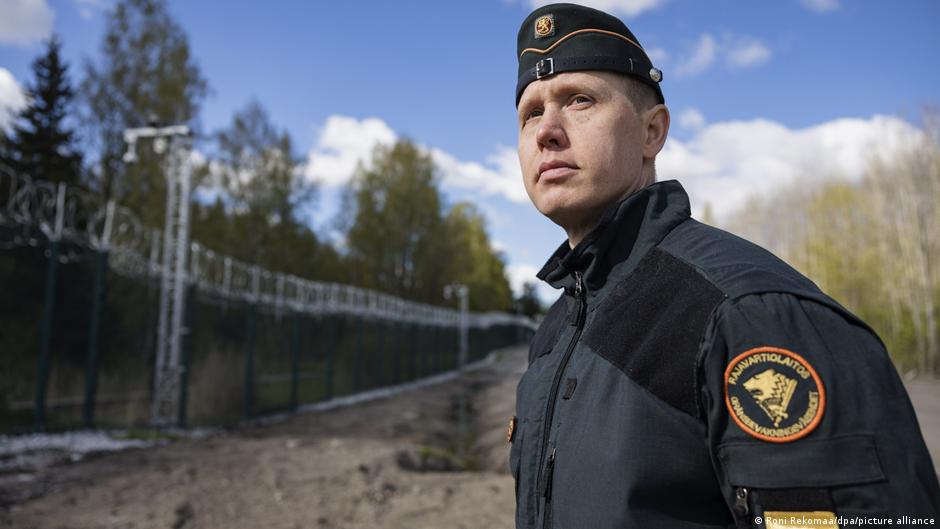
Finland has completed construction of a 200-kilometer barrier along its border with Russia, a major infrastructure project that reflects the hardening of Europe’s security posture since Moscow’s full-scale war against Ukraine and Finland’s accession to NATO.
The Finnish Border Guard said on Monday, September 7, that the work had been finished on the eastern frontier. The project is one of the clearest physical signs of how Russia’s war has changed the security environment for NATO members and for companies operating across Northern Europe.
Interior Minister Mari Rantanen described the fence as part of Finland’s core responsibility to protect its citizens, emphasizing that border security has become a more urgent priority in what she called unpredictable times.
“The main task of the state is to ensure the security of its citizens,” Rantanen said, adding that the barrier on the eastern border is “an integral part of an effective border security system in these unpredictable times.”
For Washington, the completion of the barrier carries implications beyond Finland’s national border policy. Finland is now a NATO member, and its eastern border is also part of the alliance’s frontier with Russia. The project therefore fits into a broader debate in the United States over burden-sharing, allied defense readiness and the practical costs of deterring Russian pressure against Europe.
A NATO Frontier With Business Consequences
Finland’s government has framed the barrier as a security measure, but its construction also highlights a growing market for border infrastructure, surveillance systems, logistics support and defense-adjacent services across Europe. The Finnish Border Guard said the barrier includes a 4.5-meter-high fence, a technical surveillance system, a road network and a 25-meter-wide cleared strip.
Those details matter for U.S. businesses because allied governments are increasingly investing in systems that combine physical infrastructure with sensors, monitoring and mobility. American firms in defense technology, surveillance, cybersecurity, engineering and logistics are likely to see similar demand as NATO governments reassess vulnerabilities created by Russia’s war and the risk of hybrid pressure at borders.
Finnish officials have said the country, as a member of the Schengen Area, also carries responsibility for security at the external borders of the zone. That point is important for U.S. policymakers watching Europe’s internal cohesion: pressure at one border can quickly become a political issue across the European Union, affecting immigration politics, trade flows and transatlantic coordination.
The Border Guard called the fence one of Finland’s largest infrastructure projects. According to the agency, hundreds of companies were involved in carrying out the initiative, with up to 600 people and 150 pieces of equipment working daily at construction sites. The scale underlines how national-security projects can generate immediate economic activity while also redirecting public spending toward defense and resilience.
Construction began in March 2023, after Russia’s war against Ukraine had already transformed Finland’s security calculations. Helsinki feared that Russia could use migrants as a tool of pressure against the country. That concern has become familiar across parts of Europe, where governments have accused Moscow and its allies of exploiting migration flows to create political stress and test border systems.
Washington’s View: Deterrence, Migration and Cost
From a U.S. political perspective, Finland’s fence touches several live debates in Washington: how NATO should manage its frontier with Russia, how much European allies should spend on their own security and how governments should respond to migration when it is perceived as a geopolitical instrument.
Finland’s move may be viewed by U.S. officials as evidence that newer NATO members on Russia’s border are investing directly in deterrence and civil preparedness. It also gives American lawmakers a concrete example when discussing the financial burden of European security. Unlike abstract pledges, border infrastructure is visible, measurable and politically legible.
At the same time, the project reflects the social and local costs of a more militarized border environment. In Imatra, near the construction area, residents were not enthusiastic about the project but had accepted it, Mayor Matias Hilden said in an interview with DW. He described the need for the barrier as a source of sadness.
“It is a little sad that we need this,” Hilden said.
The reaction in Imatra captures a tension that U.S. companies and policymakers will need to consider: security investments may reduce certain risks, but they can also signal a long-term deterioration in regional stability. For businesses, that can affect site selection, insurance, supply-chain planning and the risk premium attached to operations near sensitive borders.
The border issue also connects to events in September 2022, when a large number of Russians fled to Finland after Russian President Vladimir Putin announced a partial mobilization. That movement of people became part of Finland’s broader reassessment of its exposure to decisions made in Moscow.
For American firms, the bottom-line message is that the security environment in Europe remains an operational factor, not just a diplomatic backdrop. Infrastructure spending may create contracts and opportunities, but it also reflects a higher-risk environment in which border closures, migration pressure, sanctions and defense policy can affect markets quickly.
Finland’s completed fence is therefore more than a national project. It is a marker of how the war in Ukraine continues to reshape NATO’s map, Europe’s public spending priorities and the calculations facing U.S. businesses with interests across the continent.



