Macron Urges EU Social Media Ban for Under-15s, Raising Stakes for US Platforms
France’s president is pressing Brussels for EU-wide rules after a national ban was blocked on free-expression grounds.
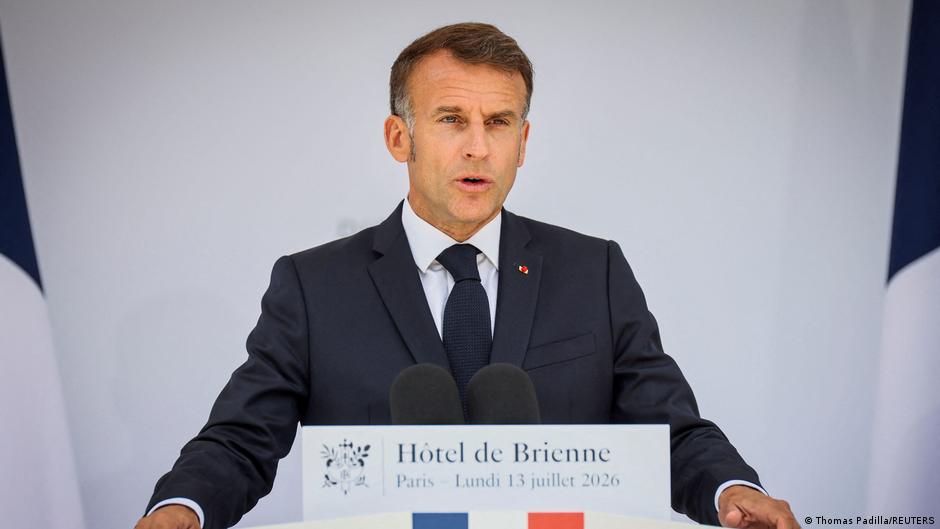
French President Emmanuel Macron has asked European Commission President Ursula von der Leyen to prepare a European legislative act that would prohibit children under 15 from using social media, according to AFP, which said it reviewed a letter dated August 29 on Monday, September 7.
The request moves a domestic French fight into Brussels and could carry direct consequences for US technology companies whose platforms dominate teenage screen time in Europe. TikTok, Instagram and Snapchat were cited in the French health-policy debate that preceded the proposal, and any EU-wide measure would likely require large platforms to make changes to age verification, access controls and compliance systems across the bloc.
For Washington and Silicon Valley, the initiative is another sign that European policymakers are prepared to regulate the design and reach of major social platforms more aggressively than the United States. If the European Commission takes up Macron’s request, American companies could face a new layer of legal obligations in one of their most important international markets.
France turns to Brussels after legal setback
Macron’s appeal follows a setback in France. On August 14, France’s Constitutional Council blocked a national law that would have imposed a similar ban. The country’s highest constitutional review body said the provision violated freedom of expression.
Macron, who is due to leave office after elections in April 2027, has said he hopes to find a way forward in the coming months through revised national legislation that would comply with both EU law and the French Constitution. But in his letter to von der Leyen, he argued that the issue should now be handled at the European level.
“It is now essential to go further and harmonize this provision through a new European document,” Macron wrote, according to the reported contents of the letter.
Reuters previously noted that the Constitutional Council’s decision was a blow to the French president. Macron instructed Prime Minister Sebastien Lecornu to prepare a new draft law described as “legally impeccable.”
The shift to Brussels reflects the limits of national regulation in a digital market dominated by cross-border platforms. A French-only measure would affect one jurisdiction; an EU instrument could force companies to build compliance practices that apply across the bloc, increasing the cost and operational complexity for social media firms headquartered or heavily managed from the United States.
Business impact for US platforms
The proposal’s bottom-line significance lies in enforcement. A ban on social media access for children under 15 would not be limited to a political statement. It would raise practical questions about how platforms confirm user age, restrict accounts, handle parental consent, preserve user privacy and manage appeals from users wrongly blocked.
Those requirements could affect advertising reach, user growth and product design. Younger users are a strategically important audience for social platforms, even when direct monetization is limited by existing rules. Restrictions on under-15 access could reduce engagement among teenagers, alter influencer ecosystems and push platforms to invest in more robust age-assurance technology.
For American businesses beyond the technology sector, the implications are also commercial. Brands that market to younger consumers through social channels may face a narrower audience in Europe. Agencies, app developers, gaming companies and entertainment firms could see campaign planning and customer acquisition strategies disrupted if EU rules sharply limit teenage access to large social platforms.
The French proposal also lands in a broader transatlantic policy environment in which US companies often face tougher digital regulation abroad than at home. Washington has debated child online safety, platform liability and social media harms, but the United States has not adopted a nationwide under-15 social media ban. If Brussels advances Macron’s idea, US lawmakers may face renewed pressure from parents’ groups, state officials and child-safety advocates to consider comparable restrictions.
Health concerns drive the proposal
The French bill emerged after the country’s health oversight body warned in a December 2025 report about harmful effects on children from platforms such as TikTok, Instagram and Snapchat. The report identified potential risks including reduced self-esteem and possible increases in self-harm, suicide and drug use.
The same debate has been shaped by statistics on teenage phone habits. According to the figures cited in the source material, one in two teenagers spends between two and five hours a day on a smartphone, and 58% use phones to access social networks.
Macron made the proposed ban a key item of his domestic agenda during his final year in office, giving the initiative political weight even after the Constitutional Council blocked the national provision. By asking von der Leyen to act, he is seeking to convert a French policy priority into an EU-wide standard.
That strategy could also help France avoid a patchwork problem. If each member state sets its own child-access rules, platforms may face different age thresholds, verification duties and penalties across Europe. A harmonized European rule would be more predictable in legal terms, but potentially more sweeping in business terms because companies would need to adapt at scale.
Australia has already moved in this direction. In December 2025, people under 16 were blocked from access to most social networks there. That precedent is likely to be watched closely in Europe and the United States as governments test how far they can go in limiting minors’ access to major platforms.
For US executives, the immediate question is whether Macron’s request becomes a formal European Commission proposal. If it does, the debate will shift from national politics in Paris to EU lawmaking in Brussels, where the outcome could define how American social media companies manage young users across the European market.