Russia Closes Romanian Consulate in St. Petersburg Amid Diplomatic Tensions
Moscow's move to shut Romania's consulate follows Bucharest's closure of the Russian consulate in Constanta after a drone incident.
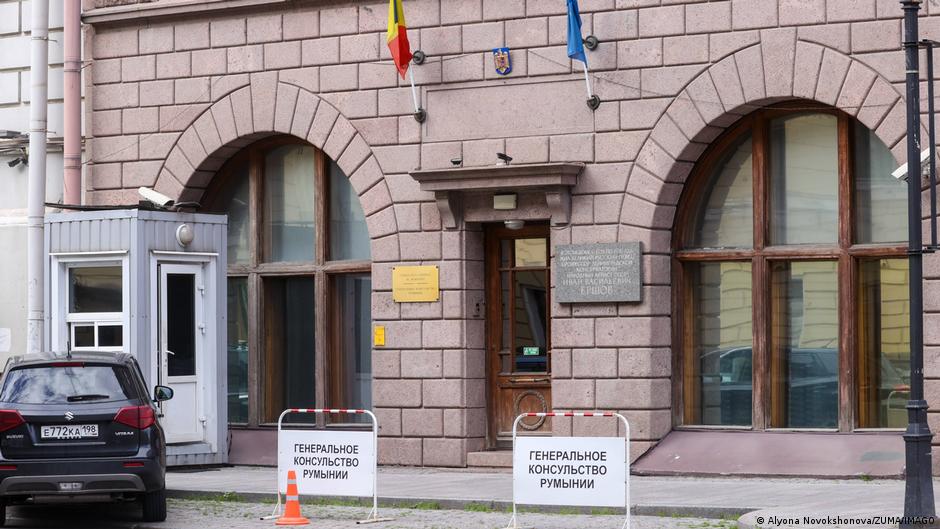
Russia has announced the closure of the Romanian consulate in St. Petersburg and declared its acting consul general, Laurentiu Constantin, persona non grata. The Russian Foreign Ministry communicated this decision to Romania's ambassador to Moscow, Cristian Istrate, on June 25.
This measure is described by Moscow as a direct response to Bucharest's withdrawal of consent for Russia's consulate general in Constanta and the declaration of the Russian consul general there as persona non grata.
Escalating Diplomatic Fallout from Drone Incident
The diplomatic tit-for-tat between Russia and Romania intensified following a May incident in which a drone, identified by Romanian authorities as Russian, crashed onto the roof of a residential building in Galați, eastern Romania. The incident resulted in injuries to a 14-year-old boy and a 53-year-old woman, and a fire broke out in an apartment on the building's tenth floor.
"This measure is a response to Bucharest's unjustified withdrawal of consent for the operation of Russia's consulate general in Constanta," stated the Russian Foreign Ministry.
Romania's Ministry of Defense confirmed the drone was Russian, marking the first known case of a drone used in the Russia-Ukraine conflict impacting a densely populated area within a NATO member state. Following the incident, Romanian emergency services reported that the drone’s explosive payload detonated fully, injuring two people who required hospitalization, while 70 residents were evacuated and the fire was extinguished.
In response, Romanian President Nicolae Ciucă ordered the closure of the Russian consulate in Constanta and declared the Russian consul general persona non grata. Bucharest also requested NATO to reinforce its air defense systems in Romania, underscoring growing security concerns.
The Russian Foreign Ministry criticized Bucharest's actions as unjustified and retaliated by closing the Romanian consulate in St. Petersburg, escalating tensions between the two countries.
Implications for U.S. Businesses and Policy
While this diplomatic spat is between Russia and Romania, it carries broader implications for U.S. businesses and policymakers. Romania, as a NATO member and an increasingly strategic partner in Eastern Europe, is often a gateway for American investments and defense cooperation in the region. Heightened instability and mutual expulsions of diplomats could disrupt bilateral relations that underpin trade and security frameworks benefiting U.S. interests.
Moreover, the drone incident signals an alarming expansion of the Russia-Ukraine conflict's spillover effects into NATO territory. U.S. defense contractors and technology firms specializing in missile defense and counter-drone systems may see increased demand as NATO fortifies Eastern European air defenses. Conversely, American companies with operations or supply chains in Romania could face unforeseen risks amid escalating regional tensions.
From a Washington policy perspective, the episode underscores the need for cautious engagement and enhanced support for Eastern European allies. It also highlights challenges in managing the complex diplomacy of NATO partnership amid ongoing hostilities near Russia's western frontier.