Russian Missile and Drone Attacks on Kyiv Raise Security Concerns for US Businesses
Intensified Russian strikes on Kyiv and other Ukrainian cities jeopardize stability, with potential repercussions for American companies operating in the region.
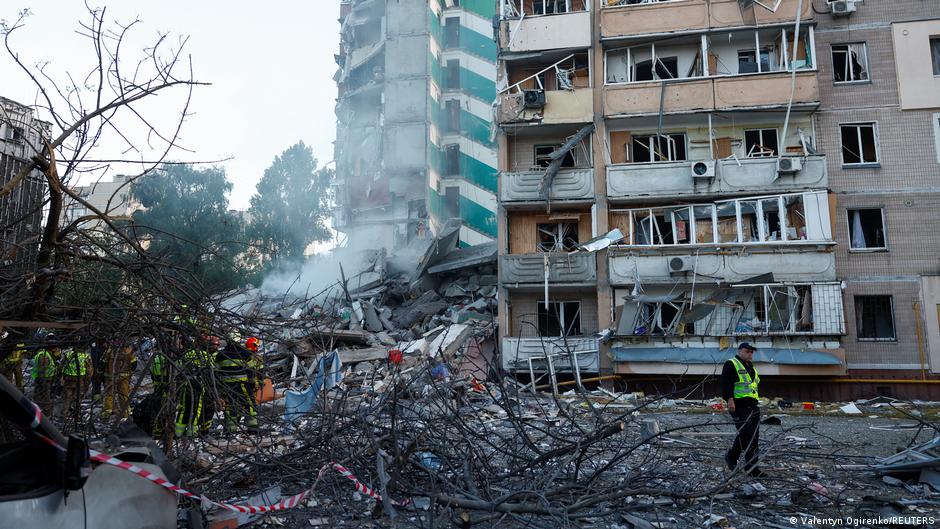
In the early hours of May 14, Russian forces launched a heavy barrage of missiles and drones targeting Kyiv, Ukraine's capital, causing significant destruction and casualties. The assault ignited fires, resulted in the partial collapse of a residential building, and forced emergency responders to rescue multiple individuals trapped under rubble. This escalation highlights growing regional instability that American businesses and policymakers must carefully monitor.
Impact of the Attacks on Kyiv and Broader Ukrainian Regions
The strike concentrated on multiple districts within Kyiv, including the southeastern Darnytskyi area where a multi-story residential building partially collapsed. Ukrainian emergency services swiftly rescued at least ten people from the debris with rescue operations ongoing. Local officials reported a minimum of 16 injured individuals and one fatality linked to the assault.
Further damage extended to the eastern Dniprovs’kyi district, where drone debris caused a rooftop fire atop a five-story residential building and struck a private house. Northern parts of Kyiv experienced similar destruction, with drone fragments hitting a twelfth-floor apartment and sparking a fire. Non-residential structures across Shevchenkivskyi, Solomianskyi, and Obolonskyi districts also incurred damage.
In western Kyiv's Solomianskyi district, a car caught fire at a business center parking lot, while small architectural structures and a gas station in the Darnytskyi district were set ablaze. The southern Holosiivskyi district saw debris scatter near a business center and a roadway, compounding the city's widespread damage.
Ukrainian Air Forces confirmed similar missile and drone strikes across several other regions, including Kharkiv, Poltava, Sumy, Donetsk, Odesa, Mykolaiv, Dnipropetrovsk, and Cherkasy. Notably, the border city of Uzhhorod experienced explosions, marking an expansion of the conflict's geographic scope.
"In the previous 24 hours, Russian forces launched 892 drones against Ukraine, with Ukrainian air defenses intercepting 710 of them," Ukrainian military sources reported.
Washington’s Strategic and Economic Implications
For US policymakers and American businesses, the intensification of Russian strikes on Kyiv and other urban centers underscores the heightened risks associated with operations in Eastern Europe. The destruction of infrastructure and ongoing conflict could disrupt supply chains, energy markets, and regional economic stability—factors that directly impact multinational corporations and investors.
Energy companies with exposure to European markets face volatility risks given Ukraine's role as a transit corridor for natural gas. Additionally, technology and defense contractors supplying Ukraine or allied nations might see increased demand but also navigate complex geopolitical risks.
Strategically, the attacks complicate diplomatic efforts to stabilize the region and may prompt Washington to reconsider military aid levels and economic sanctions related to the conflict. The intensification of hostilities serves as a reminder of the fragile security environment American businesses must factor into their risk assessments when operating near active conflict zones.
As the situation evolves, US government agencies are expected to coordinate closely with private sector stakeholders to mitigate potential economic fallout while reinforcing support for Ukraine's sovereignty.