Ukraine Anti-Corruption Agencies Search Prosecutor General’s Office
The inquiry into alleged protection of fraudulent call centers comes as Kyiv weighs tougher penalties with implications for U.S. oversight.
Ukraine’s main anti-corruption bodies said they had launched an operation targeting public officials suspected of links to fraudulent call centers, placing a staff member of the country’s Prosecutor General’s Office under scrutiny and bringing renewed attention to governance risks in a country heavily backed by Washington.
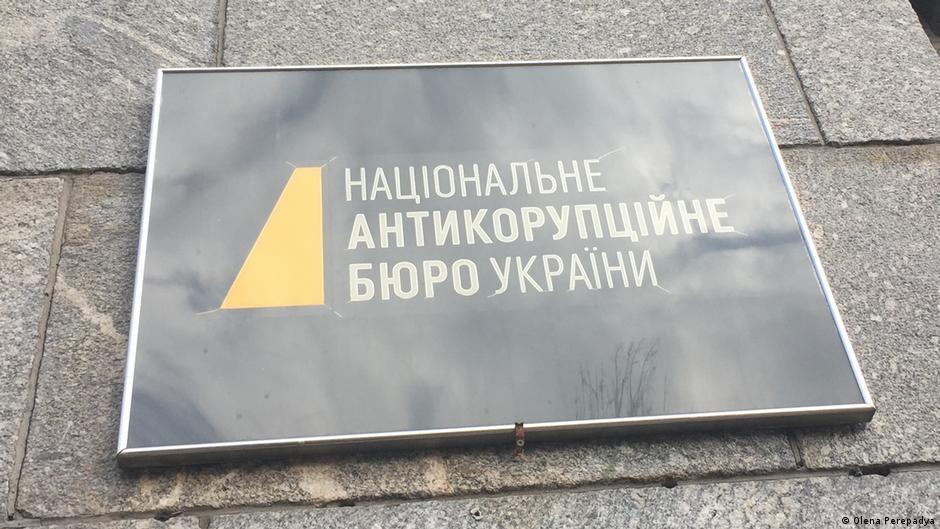
The National Anti-Corruption Bureau of Ukraine, known as NABU, and the Specialized Anti-Corruption Prosecutor’s Office, or SAP, announced an operation to expose what they described as a criminal organization involved in protecting a network of fraudulent call centers and legalizing assets. According to the agencies’ statements published on their Telegram channels on Friday, September 4, investigators believe the organization was headed by an employee of the Office of the Prosecutor General of Ukraine.
The agencies said further details would be provided later. On the same day, they conducted searches at the Prosecutor General’s Office. The office confirmed that investigative measures were taking place and said the suspicions raised by NABU and SAP did not directly concern Ukraine’s prosecutor general, Ruslan Kravchenko.
“The Office of the Prosecutor General will provide the anti-corruption bodies with full assistance and all necessary information within the law,” the office said, adding that the employee whose possible involvement is being checked would be suspended from official duties during the pretrial investigation.
For U.S. policymakers and companies monitoring Ukraine, the case lands at a sensitive intersection of anti-corruption enforcement, cyber-enabled fraud and wartime institutional accountability. Washington has repeatedly tied continued support for Kyiv to progress on governance and rule-of-law reforms, while American firms assessing Ukraine-related exposure must navigate sanctions compliance, fraud risk and reputational concerns.
Officials Named in Reports, but Not Confirmed
Ukrainska Pravda reported that the person under suspicion by NABU and SAP was Serhiy Kropyva, deputy head of the international legal cooperation department at the Prosecutor General’s Office. The outlet said he had been detained, citing sources in business circles.
Journalists also reported that searches were conducted involving Ukrainian official Oleh Kiper. Kiper previously held several positions in the Prosecutor General’s Office and in 2023 was appointed head of the Odesa regional military administration. Before taking his latest position at the Prosecutor General’s Office, Kropyva had served as Kiper’s deputy in the Odesa regional military administration. Earlier, he had also worked in the Prosecutor General’s Office, in the cybersecurity department.
There was no official confirmation of the individuals affected by the searches or of the suspects. That distinction matters for international stakeholders: the official record so far confirms an investigation and searches, while the specific identities circulating publicly remain based on media reporting.
The case also comes as Ukraine seeks to demonstrate that its anti-corruption institutions remain capable of pursuing sensitive inquiries even when they touch powerful offices. NABU and SAP have been closely watched by Western governments, including the United States, because their independence and effectiveness are viewed as a barometer of Kyiv’s reform trajectory.
Call-Center Fraud Becomes a Legislative Target
One day before the NABU and SAP operation, on September 3, Ukrainian President Volodymyr Zelensky submitted a bill to the Verkhovna Rada that would toughen penalties for organizing fraudulent call centers and being connected to their activities.
Under the proposal, organizers of such call centers could face up to 12 years in prison with confiscation of property. Working at such a site could carry a prison sentence of up to 10 years. Recruiting people into call centers could bring up to five years in prison, while repeated recruitment could be punished by up to 10 years. Even landlords renting premises to such call centers could face penalties of up to 10 years in prison.
For American businesses, the proposed penalties underscore the expanding legal risks around third-party service providers, outsourced communications operations and cross-border fraud schemes that may touch Ukraine. Companies with vendors, contractors or customer-service operations in the region could face heightened due diligence expectations if Kyiv moves forward with a tougher enforcement framework.
The legislative push followed a large nationwide operation by Ukraine’s National Police to expose fraudulent call centers. Authorities said they shut down 94 such organizations. During searches, law enforcement officers seized, among other items, about $2 million, 64,000 euros, gold bars and jewelry.
The scale of the seizures suggests a significant illicit economy tied to phone-based fraud, asset laundering and potentially cyber-related operations. For U.S. financial institutions, payment processors and compliance teams, cases of this kind are relevant because proceeds from fraud can move through international channels, shell structures or digital payment systems before being converted into hard assets.
War, Fraud and Security Concerns
The victims of such call centers include not only Ukrainians but also Russians, according to the source article. The problem became especially visible after Russia’s full-scale invasion of Ukraine, as fraudsters began persuading deceived people to carry out various acts of sabotage.
Kyiv and Moscow accuse each other of organizing the operation of such “sabotage” call centers. The mutual allegations highlight how criminal fraud, information warfare and wartime security operations can blur together in the region’s conflict environment.
From Washington’s perspective, the investigation has several bottom-line implications. First, it tests whether Ukraine’s anti-corruption bodies can pursue politically sensitive leads without undermining broader state functions during wartime. Second, it adds to congressional scrutiny over how Ukrainian institutions police corruption while receiving extensive foreign support. Third, it signals to U.S. businesses that fraud and compliance exposure connected to Ukraine is not limited to battlefield procurement or reconstruction spending, but also includes digital scams, call-center infrastructure and asset laundering.
The Prosecutor General’s Office has said it will cooperate with investigators and suspend the employee being reviewed during the pretrial investigation. Until NABU and SAP release additional details, the central confirmed facts remain limited: an operation was announced, searches were conducted at the Prosecutor General’s Office, the prosecutor general himself was not directly implicated by the stated suspicions, and no official confirmation has been issued regarding the specific individuals affected by the searches or formally suspected.